Options for unlocking the iPhone
Posted: November 29, 2012|
Note: iPhone 5 owners on the Verizon network state that their GSM slot is unlocked out of
the box! Sprint iPhones may also be this way. AT&T has a "no commitment" option for
the iPhone 5 but it still states: "*2-yr and no commitment pricing require voice agreement
with qualifying monthly data plan required." I don't get what a no commitment phone
with a requirement to have a monthly plan is. You are unlocked, but still on a contract.
What's the point?
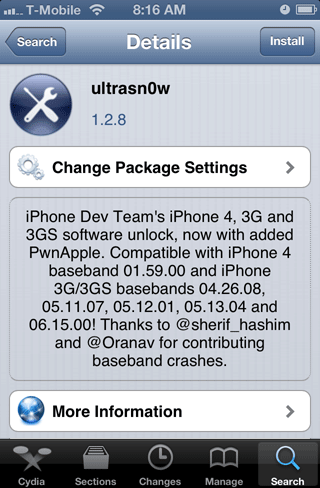
While I used to create unlocking tutorials for years, I have stopped doing so for a couple of reasons. First, because the Digital Millenium Copyright Act (DMCA) no longer protects the right to unlock a cell phone purchased locked from a carrier beginning in January of 2013. Second, because the iPhone Dev Team hasn't released a software unlock since June of 2010! However, we don't have to worry about this since Apple has been selling factory unlocked iPhones for some time now. You can purchase an iPhone 4, 4S or a 5. They are sold at a premium price. 
If purchasing a factory unlocked iPhone isn't an option for you, then your only other choices are listed below.
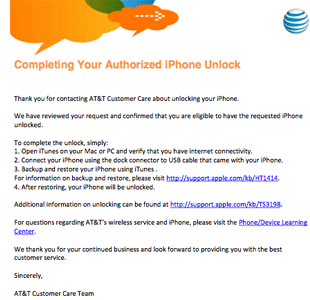 Another option is to get your carrier to unlock your iPhone. AT&T has started doing this
for iPhones that have fulfilled their contract, or have had their ETF paid. You have to be
a current or former customer to receive an unlock. You can't just purchase an old iPhone
from someone and then call up AT&T to unlock it. This method costs nothing and is
permanent. When a new firmware comes out you can install it without any worries about
maintaining an unlock.
Another option is to get your carrier to unlock your iPhone. AT&T has started doing this
for iPhones that have fulfilled their contract, or have had their ETF paid. You have to be
a current or former customer to receive an unlock. You can't just purchase an old iPhone
from someone and then call up AT&T to unlock it. This method costs nothing and is
permanent. When a new firmware comes out you can install it without any worries about
maintaining an unlock.
My wife just got her iPhone unlocked by AT&T. It took only minutes! You can read about it here. On a related note there are some websites out there that are able to provide carrier sanctioned unlocks (they probably know someone who works at the carrier that has access to the whitelist) for a fee. You can read about one of these such sites over at the MacRumors forum.  Your final option (and this is not an endorsement) is to use a product called the Gevey
SIM. It's known as a SIM interposer as it goes between your SIM card and the SIM reader
in the iPhone. It takes advantages of certain technological vulnerabilites in the way
the SIM is queried to fake the iPhone into thinking you have a legitimate SIM card
installed. The downside? Having to worry about creating custom firmware files that do
not update your modem firmware every time Apple releases a new firmware.
Your final option (and this is not an endorsement) is to use a product called the Gevey
SIM. It's known as a SIM interposer as it goes between your SIM card and the SIM reader
in the iPhone. It takes advantages of certain technological vulnerabilites in the way
the SIM is queried to fake the iPhone into thinking you have a legitimate SIM card
installed. The downside? Having to worry about creating custom firmware files that do
not update your modem firmware every time Apple releases a new firmware.
One of the most reliable sources for purchasing these SIMs is apparently from a company called Apple n Berry. |